Docs/Developers & integrations/ChatGPT Integration with Salesforce

ChatGPT Integration with Salesforce

Note: If you haven't installed ValueText in Salesforce yet, complete that setup first.

Last updated 11 Mar 2026
OpenAI introduced ChatGPT, a long-form question-answering AI that answers complex questions conversationally. It's trained to learn what humans mean when they ask a question.

What is ChatGPT

ChatGPT is a large language model chatbot developed by OpenAI, based on GPT-3.5. It can interact in conversational dialogue and produce responses that appear surprisingly human.

Large language models work by predicting the next word in a series of words.

ValueText was the first to bring both SMS and WhatsApp texting to Salesforce, and is now the first to bring ChatGPT capabilities to the top-rated CRM in the world.

ChatGPT use cases

ValueText is starting with these use cases:

  • Generate a summary of the conversation.
  • Get the best possible reply to the conversation based on the full discussion.
  • Automatically reply to the last message.

Health care (generate a summary of the conversation): you can generate a summary of the conversation between a doctor and a patient. ChatGPT lets the agent produce the best-case description of the conversation, so a manager doesn't have to read the entire conversation between agent and customer: they can read the summary instead.

Real estate (best possible reply): as a real estate specialist, you can't please every customer, and some may get irritated during the conversation. That can leave you unsure of the best way to turn things around. This is where ChatGPT helps: select best response and the AI generates the best possible reply based on the whole conversation, to help you turn things in your favor.

Insurance (automatic reply to the last message): life changes constantly, and unpredictable things happen, so everyone needs insurance on a variety of things. Discussing a customer's specific needs can get confusing, since customers don't always know how to explain what they're looking for. When that happens, go to ChatGPT and select either best response or automatic reply to the last message: the AI scans the whole conversation, gives you the best options, and suggests a follow-up question to ask if you need more information before responding to the customer.

To use ChatGPT's capabilities, follow the setup steps below.

Set up ChatGPT

  1. Sign up for ChatGPT. Create an account at https://chat.openai.com/auth/login.
  2. Add the remote site setting in Salesforce. Go to Setup > Remote Site Settings, add https://api.openai.com, and click Save.
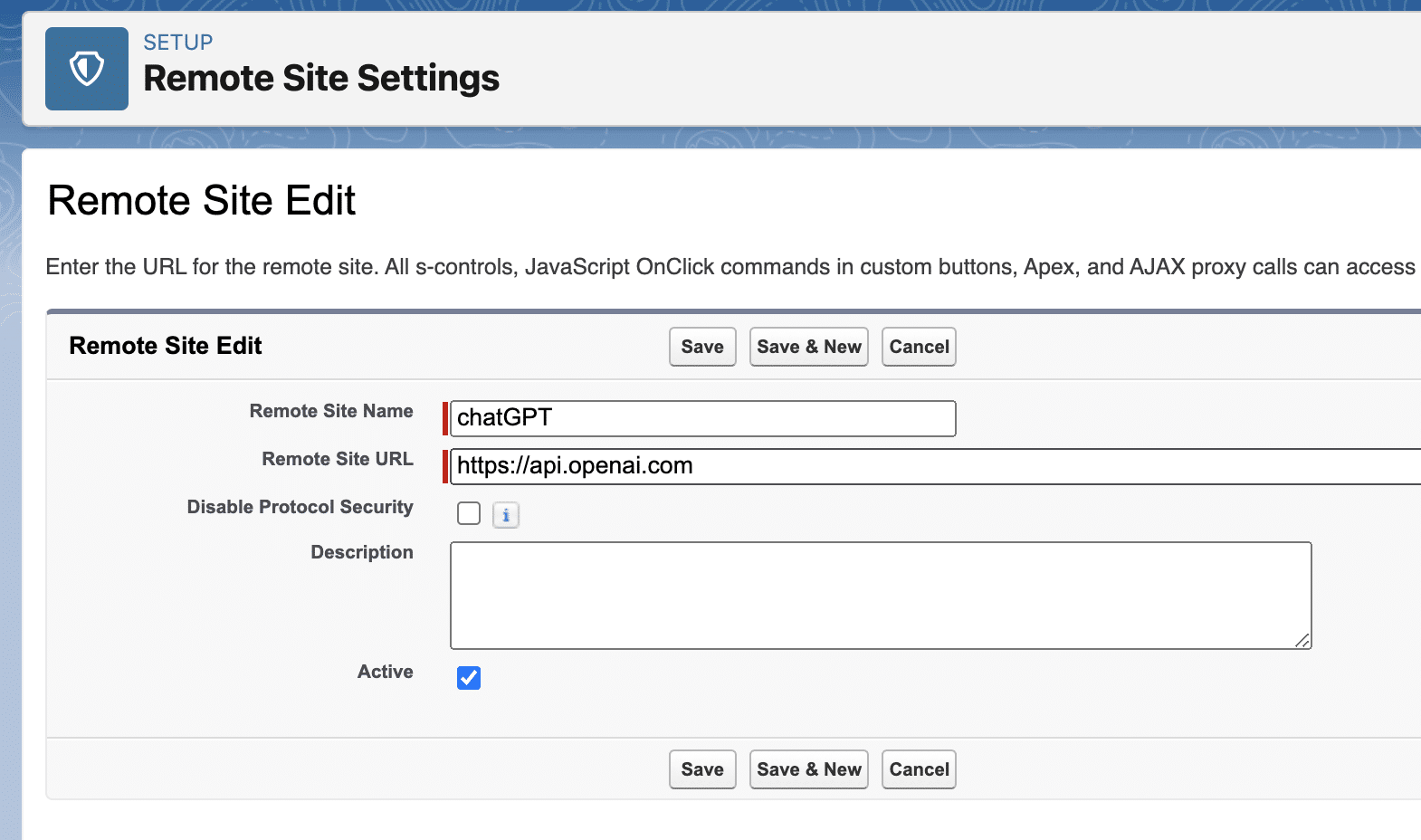
    Salesforce Remote Site Edit screen with Remote Site Name set to chatGPT, Remote Site URL set to https://api.openai.com, and Active checked.
    Fig 01
  3. Open the View API Keys option. In your ChatGPT account, go to View API Keys.
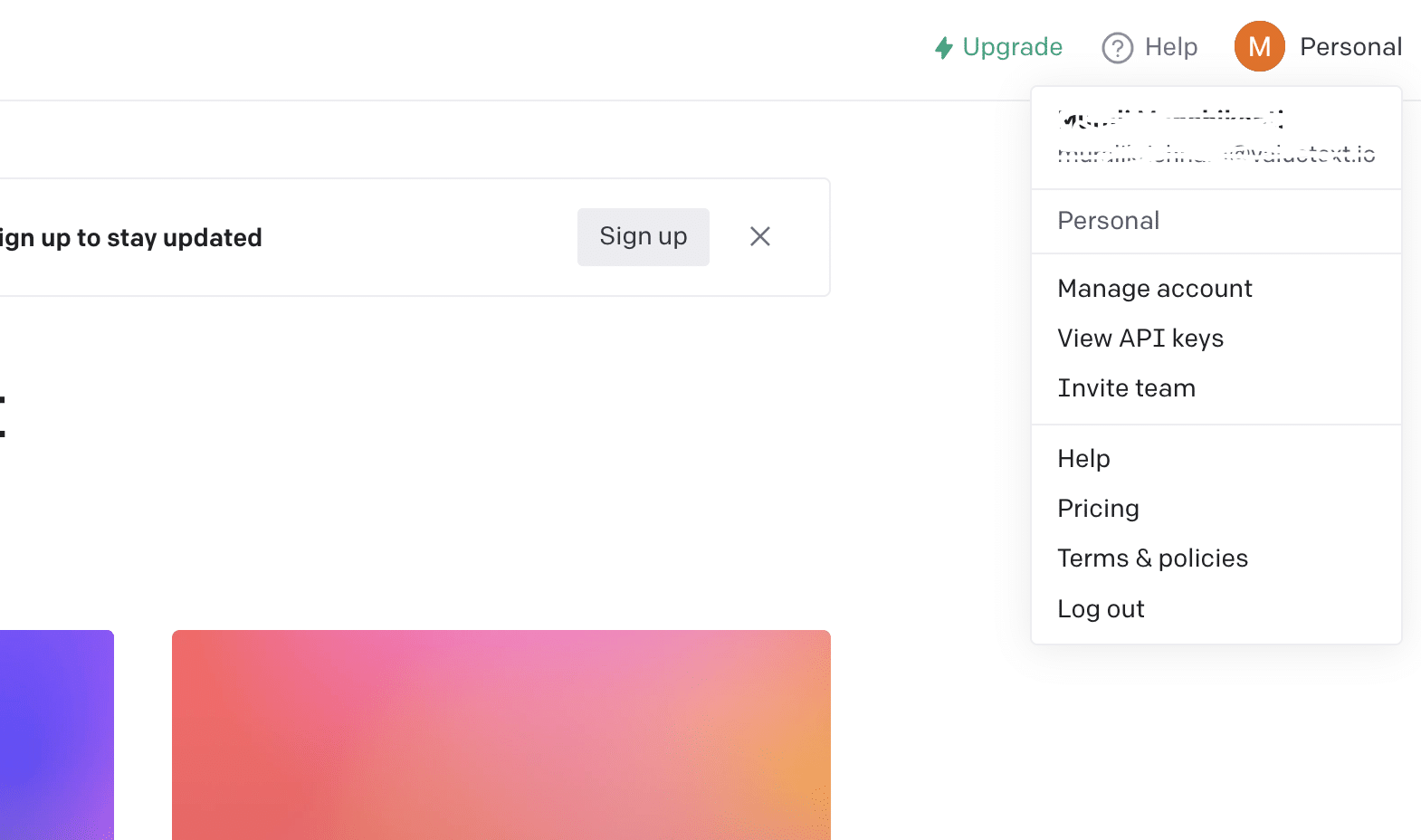
    OpenAI account dropdown menu with Manage account, View API keys, and Invite team listed above Help, Pricing, Terms & policies, and Log out.
    Fig 02
  4. Generate your API key. Follow the steps on the page to generate your own API key, then copy it.
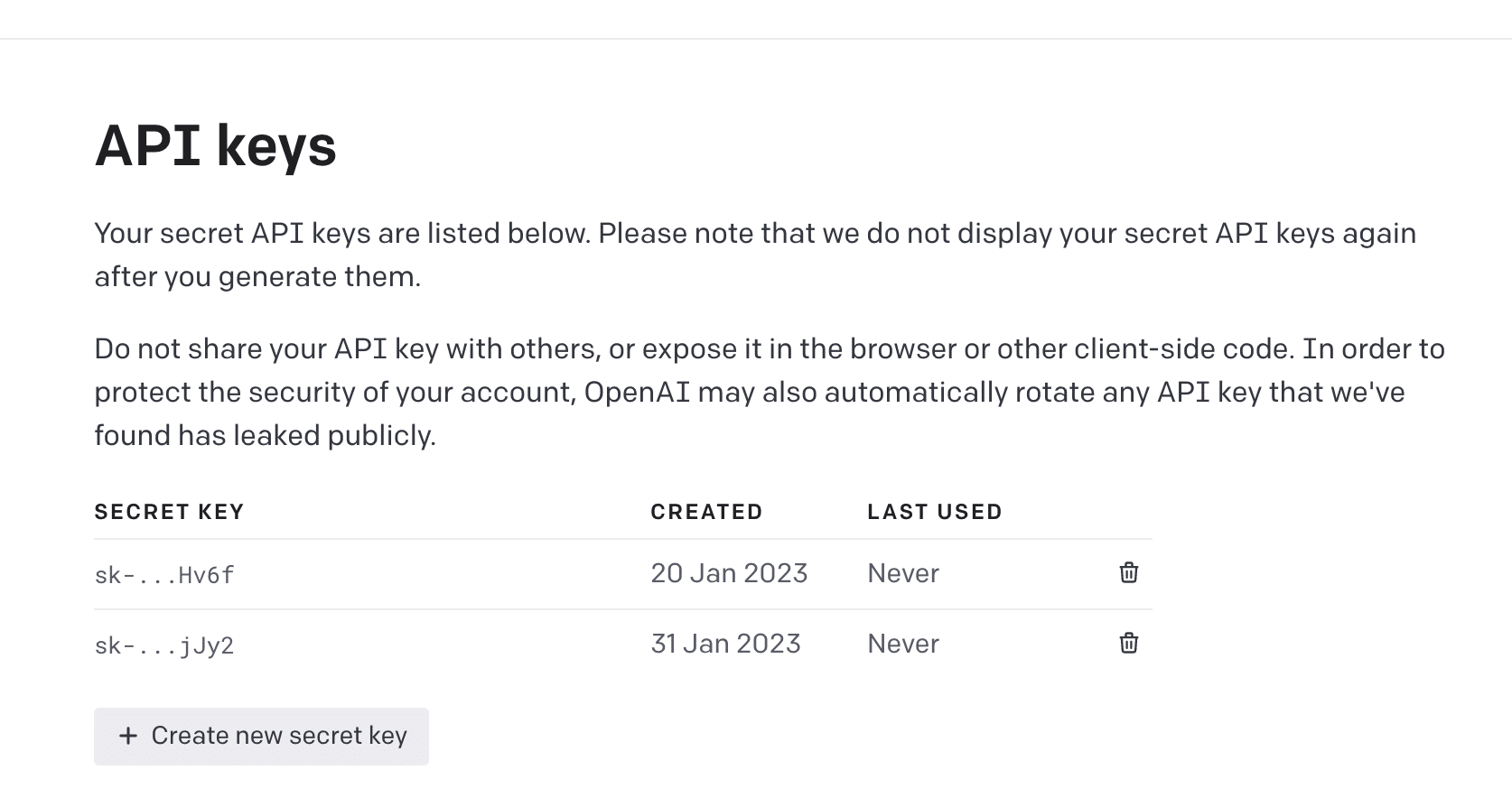
    OpenAI API keys page listing existing secret keys with Created and Last Used columns, and a Create new secret key button below.
    Fig 03
  5. Store the API key in Salesforce. You need ValueText already installed in Salesforce; if it isn't installed yet, complete that setup first. Log in to Salesforce, open ValueText Setup, go to ChatGPT, and paste the token you copied in step 3 into the ChatGPT Token field.
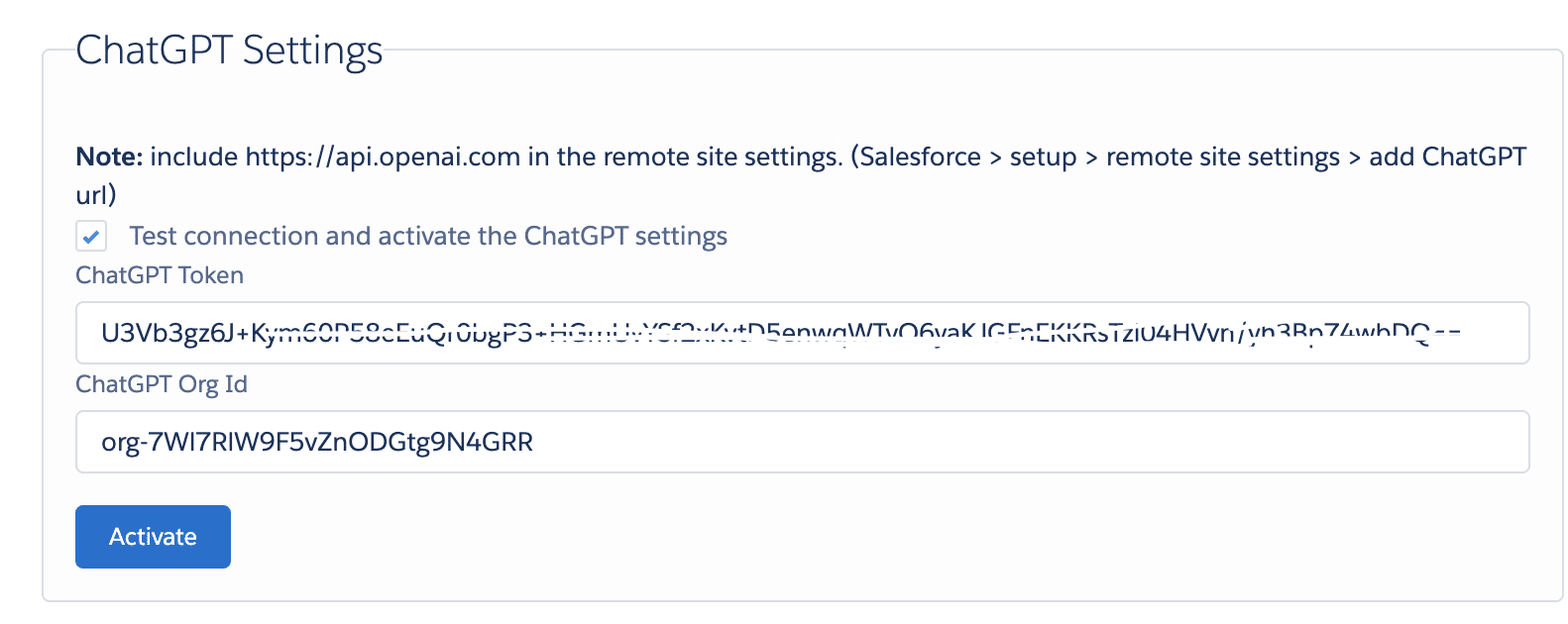
    ValueText Setup ChatGPT Settings panel in Salesforce with the Test connection and activate the ChatGPT settings checkbox checked, a masked value in the ChatGPT Token field, org-7WI7RIW9F5vZnODGtg9N4GRR in the ChatGPT Org Id field, and an Activate button.
    Fig 04
  6. Find your org ID and enable ChatGPT. Go to https://platform.openai.com/account/org-settings and copy your org ID. Paste it into the ChatGPT Org Id field, enable Test connection and activate the ChatGPT settings, then click Activate.

Once steps 1 through 6 are done, a few options are enabled automatically in Salesforce. To check, open any record where you have the Mini Chat Console set up and some conversation history, so you can test ChatGPT. If you don't have the Mini Chat Console set up yet, follow the steps at /docs/add-chat-console-to-record-detail-page/.

Test ChatGPT in the Mini Chat Console

Open a conversation and click ChatGPT at the bottom left of the Mini Chat Console. Before testing it, look at the images below.

Generate a summary of the conversation:
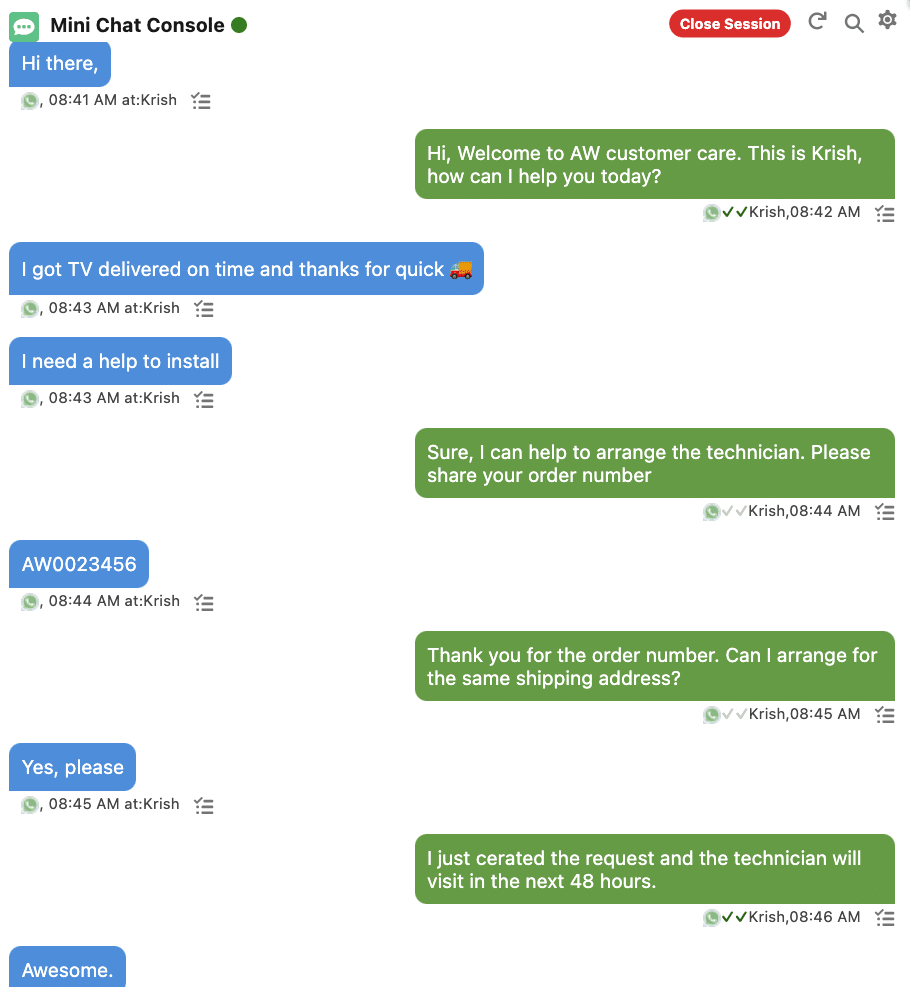
Mini Chat Console showing a sample WhatsApp conversation between an agent and a customer about a TV delivery and installation request.
Fig 05

Clicking ChatGPT gives you access to the Generate the summary option, shown in image 1 and image 2.

Image 1:
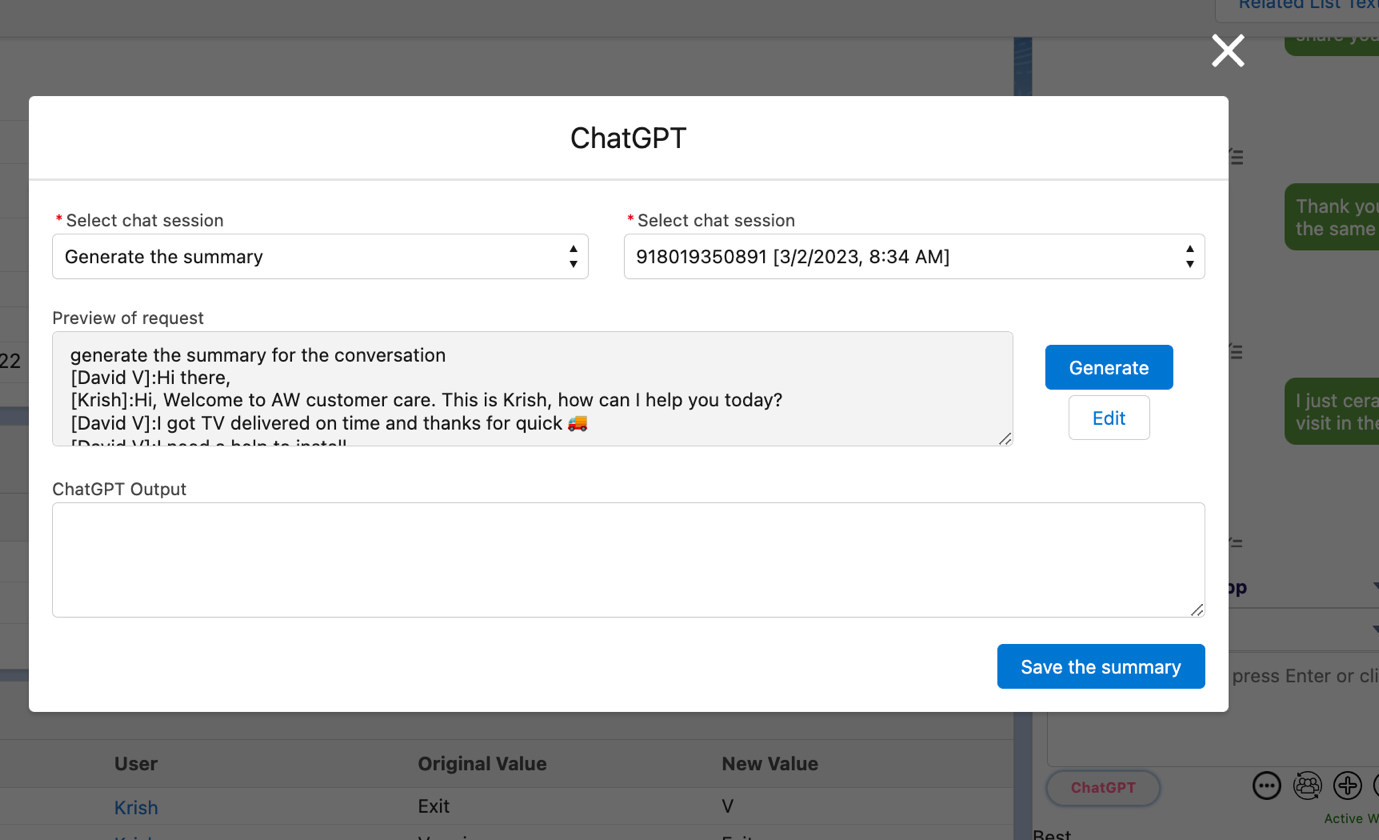
ChatGPT modal in the Mini Chat Console with Generate the summary chosen from the Select chat session dropdown, a preview of the generated request, an empty ChatGPT Output field, and Generate, Edit, and Save the summary buttons.
Fig 06

Image 2:

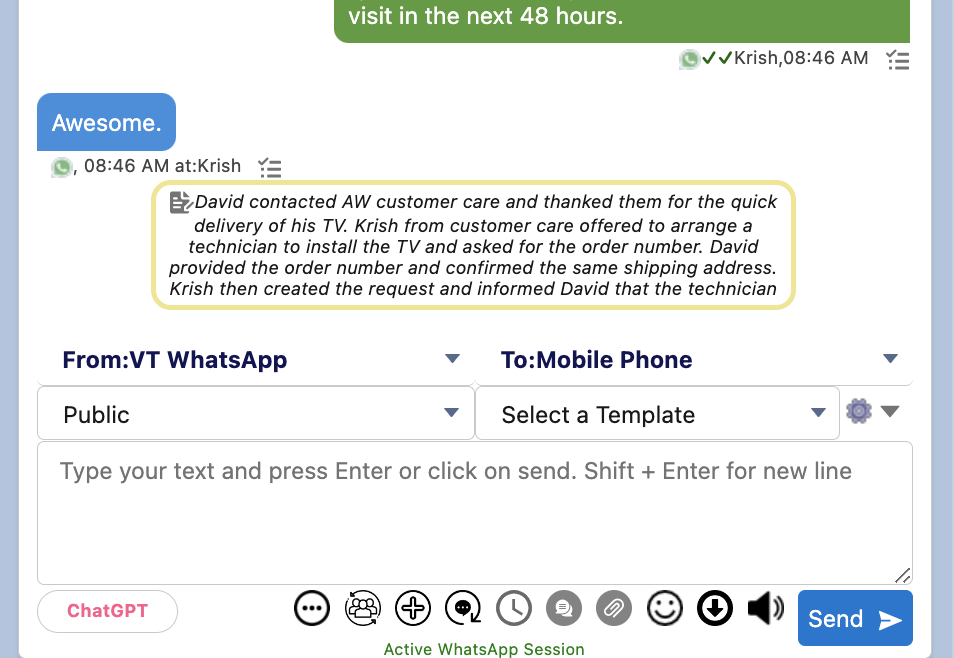
Mini Chat Console showing the ChatGPT-generated conversation summary in a highlighted box above the message composer, with the ChatGPT option visible in the toolbar.
Fig 07

Find more information about ChatGPT pricing here.

Was this helpful?
← PreviousSend Bulk or Single SMS via Apex Next →Create Message Bucket Records in Salesforce from SFMC
Docs/Developers & integrations/ChatGPT Integration with Salesforce

ChatGPT Integration with Salesforce

Note: If you haven't installed ValueText in Salesforce yet, complete that setup first.

Last updated 11 Mar 2026
OpenAI introduced ChatGPT, a long-form question-answering AI that answers complex questions conversationally. It's trained to learn what humans mean when they ask a question.

What is ChatGPT

ChatGPT is a large language model chatbot developed by OpenAI, based on GPT-3.5. It can interact in conversational dialogue and produce responses that appear surprisingly human.

Large language models work by predicting the next word in a series of words.

ValueText was the first to bring both SMS and WhatsApp texting to Salesforce, and is now the first to bring ChatGPT capabilities to the top-rated CRM in the world.

ChatGPT use cases

ValueText is starting with these use cases:

  • Generate a summary of the conversation.
  • Get the best possible reply to the conversation based on the full discussion.
  • Automatically reply to the last message.

Health care (generate a summary of the conversation): you can generate a summary of the conversation between a doctor and a patient. ChatGPT lets the agent produce the best-case description of the conversation, so a manager doesn't have to read the entire conversation between agent and customer: they can read the summary instead.

Real estate (best possible reply): as a real estate specialist, you can't please every customer, and some may get irritated during the conversation. That can leave you unsure of the best way to turn things around. This is where ChatGPT helps: select best response and the AI generates the best possible reply based on the whole conversation, to help you turn things in your favor.

Insurance (automatic reply to the last message): life changes constantly, and unpredictable things happen, so everyone needs insurance on a variety of things. Discussing a customer's specific needs can get confusing, since customers don't always know how to explain what they're looking for. When that happens, go to ChatGPT and select either best response or automatic reply to the last message: the AI scans the whole conversation, gives you the best options, and suggests a follow-up question to ask if you need more information before responding to the customer.

To use ChatGPT's capabilities, follow the setup steps below.

Set up ChatGPT

  1. Sign up for ChatGPT. Create an account at https://chat.openai.com/auth/login.
  2. Add the remote site setting in Salesforce. Go to Setup > Remote Site Settings, add https://api.openai.com, and click Save.
    Salesforce Remote Site Edit screen with Remote Site Name set to chatGPT, Remote Site URL set to https://api.openai.com, and Active checked.
    Fig 01
  3. Open the View API Keys option. In your ChatGPT account, go to View API Keys.
    OpenAI account dropdown menu with Manage account, View API keys, and Invite team listed above Help, Pricing, Terms & policies, and Log out.
    Fig 02
  4. Generate your API key. Follow the steps on the page to generate your own API key, then copy it.
    OpenAI API keys page listing existing secret keys with Created and Last Used columns, and a Create new secret key button below.
    Fig 03
  5. Store the API key in Salesforce. You need ValueText already installed in Salesforce; if it isn't installed yet, complete that setup first. Log in to Salesforce, open ValueText Setup, go to ChatGPT, and paste the token you copied in step 3 into the ChatGPT Token field.
    ValueText Setup ChatGPT Settings panel in Salesforce with the Test connection and activate the ChatGPT settings checkbox checked, a masked value in the ChatGPT Token field, org-7WI7RIW9F5vZnODGtg9N4GRR in the ChatGPT Org Id field, and an Activate button.
    Fig 04
  6. Find your org ID and enable ChatGPT. Go to https://platform.openai.com/account/org-settings and copy your org ID. Paste it into the ChatGPT Org Id field, enable Test connection and activate the ChatGPT settings, then click Activate.

Once steps 1 through 6 are done, a few options are enabled automatically in Salesforce. To check, open any record where you have the Mini Chat Console set up and some conversation history, so you can test ChatGPT. If you don't have the Mini Chat Console set up yet, follow the steps at /docs/add-chat-console-to-record-detail-page/.

Test ChatGPT in the Mini Chat Console

Open a conversation and click ChatGPT at the bottom left of the Mini Chat Console. Before testing it, look at the images below.

Generate a summary of the conversation:

Mini Chat Console showing a sample WhatsApp conversation between an agent and a customer about a TV delivery and installation request.
Fig 05

Clicking ChatGPT gives you access to the Generate the summary option, shown in image 1 and image 2.

Image 1:

ChatGPT modal in the Mini Chat Console with Generate the summary chosen from the Select chat session dropdown, a preview of the generated request, an empty ChatGPT Output field, and Generate, Edit, and Save the summary buttons.
Fig 06

Image 2:

Mini Chat Console showing the ChatGPT-generated conversation summary in a highlighted box above the message composer, with the ChatGPT option visible in the toolbar.
Fig 07

Find more information about ChatGPT pricing here.

Was this helpful?
← PreviousSend Bulk or Single SMS via Apex Next →Create Message Bucket Records in Salesforce from SFMC
Docs/Developers & integrations/ChatGPT Integration with Salesforce

ChatGPT Integration with Salesforce

Note: If you haven't installed ValueText in Salesforce yet, complete that setup first.

Last updated 11 Mar 2026
OpenAI introduced ChatGPT, a long-form question-answering AI that answers complex questions conversationally. It's trained to learn what humans mean when they ask a question.

What is ChatGPT

ChatGPT is a large language model chatbot developed by OpenAI, based on GPT-3.5. It can interact in conversational dialogue and produce responses that appear surprisingly human.

Large language models work by predicting the next word in a series of words.

ValueText was the first to bring both SMS and WhatsApp texting to Salesforce, and is now the first to bring ChatGPT capabilities to the top-rated CRM in the world.

ChatGPT use cases

ValueText is starting with these use cases:

  • Generate a summary of the conversation.
  • Get the best possible reply to the conversation based on the full discussion.
  • Automatically reply to the last message.

Health care (generate a summary of the conversation): you can generate a summary of the conversation between a doctor and a patient. ChatGPT lets the agent produce the best-case description of the conversation, so a manager doesn't have to read the entire conversation between agent and customer: they can read the summary instead.

Real estate (best possible reply): as a real estate specialist, you can't please every customer, and some may get irritated during the conversation. That can leave you unsure of the best way to turn things around. This is where ChatGPT helps: select best response and the AI generates the best possible reply based on the whole conversation, to help you turn things in your favor.

Insurance (automatic reply to the last message): life changes constantly, and unpredictable things happen, so everyone needs insurance on a variety of things. Discussing a customer's specific needs can get confusing, since customers don't always know how to explain what they're looking for. When that happens, go to ChatGPT and select either best response or automatic reply to the last message: the AI scans the whole conversation, gives you the best options, and suggests a follow-up question to ask if you need more information before responding to the customer.

To use ChatGPT's capabilities, follow the setup steps below.

Set up ChatGPT

  1. Sign up for ChatGPT. Create an account at https://chat.openai.com/auth/login.
  2. Add the remote site setting in Salesforce. Go to Setup > Remote Site Settings, add https://api.openai.com, and click Save.
    Salesforce Remote Site Edit screen with Remote Site Name set to chatGPT, Remote Site URL set to https://api.openai.com, and Active checked.
    Fig 01
  3. Open the View API Keys option. In your ChatGPT account, go to View API Keys.
    OpenAI account dropdown menu with Manage account, View API keys, and Invite team listed above Help, Pricing, Terms & policies, and Log out.
    Fig 02
  4. Generate your API key. Follow the steps on the page to generate your own API key, then copy it.
    OpenAI API keys page listing existing secret keys with Created and Last Used columns, and a Create new secret key button below.
    Fig 03
  5. Store the API key in Salesforce. You need ValueText already installed in Salesforce; if it isn't installed yet, complete that setup first. Log in to Salesforce, open ValueText Setup, go to ChatGPT, and paste the token you copied in step 3 into the ChatGPT Token field.
    ValueText Setup ChatGPT Settings panel in Salesforce with the Test connection and activate the ChatGPT settings checkbox checked, a masked value in the ChatGPT Token field, org-7WI7RIW9F5vZnODGtg9N4GRR in the ChatGPT Org Id field, and an Activate button.
    Fig 04
  6. Find your org ID and enable ChatGPT. Go to https://platform.openai.com/account/org-settings and copy your org ID. Paste it into the ChatGPT Org Id field, enable Test connection and activate the ChatGPT settings, then click Activate.

Once steps 1 through 6 are done, a few options are enabled automatically in Salesforce. To check, open any record where you have the Mini Chat Console set up and some conversation history, so you can test ChatGPT. If you don't have the Mini Chat Console set up yet, follow the steps at /docs/add-chat-console-to-record-detail-page/.

Test ChatGPT in the Mini Chat Console

Open a conversation and click ChatGPT at the bottom left of the Mini Chat Console. Before testing it, look at the images below.

Generate a summary of the conversation:

Mini Chat Console showing a sample WhatsApp conversation between an agent and a customer about a TV delivery and installation request.
Fig 05

Clicking ChatGPT gives you access to the Generate the summary option, shown in image 1 and image 2.

Image 1:

ChatGPT modal in the Mini Chat Console with Generate the summary chosen from the Select chat session dropdown, a preview of the generated request, an empty ChatGPT Output field, and Generate, Edit, and Save the summary buttons.
Fig 06

Image 2:

Mini Chat Console showing the ChatGPT-generated conversation summary in a highlighted box above the message composer, with the ChatGPT option visible in the toolbar.
Fig 07

Find more information about ChatGPT pricing here.

Was this helpful?
← PreviousSend Bulk or Single SMS via Apex Next →Create Message Bucket Records in Salesforce from SFMC
Docs/Developers & integrations/ChatGPT Integration with Salesforce

ChatGPT Integration with Salesforce

Note: If you haven't installed ValueText in Salesforce yet, complete that setup first.

Last updated 11 Mar 2026
OpenAI introduced ChatGPT, a long-form question-answering AI that answers complex questions conversationally. It's trained to learn what humans mean when they ask a question.

What is ChatGPT

ChatGPT is a large language model chatbot developed by OpenAI, based on GPT-3.5. It can interact in conversational dialogue and produce responses that appear surprisingly human.

Large language models work by predicting the next word in a series of words.

ValueText was the first to bring both SMS and WhatsApp texting to Salesforce, and is now the first to bring ChatGPT capabilities to the top-rated CRM in the world.

ChatGPT use cases

ValueText is starting with these use cases:

  • Generate a summary of the conversation.
  • Get the best possible reply to the conversation based on the full discussion.
  • Automatically reply to the last message.

Health care (generate a summary of the conversation): you can generate a summary of the conversation between a doctor and a patient. ChatGPT lets the agent produce the best-case description of the conversation, so a manager doesn't have to read the entire conversation between agent and customer: they can read the summary instead.

Real estate (best possible reply): as a real estate specialist, you can't please every customer, and some may get irritated during the conversation. That can leave you unsure of the best way to turn things around. This is where ChatGPT helps: select best response and the AI generates the best possible reply based on the whole conversation, to help you turn things in your favor.

Insurance (automatic reply to the last message): life changes constantly, and unpredictable things happen, so everyone needs insurance on a variety of things. Discussing a customer's specific needs can get confusing, since customers don't always know how to explain what they're looking for. When that happens, go to ChatGPT and select either best response or automatic reply to the last message: the AI scans the whole conversation, gives you the best options, and suggests a follow-up question to ask if you need more information before responding to the customer.

To use ChatGPT's capabilities, follow the setup steps below.

Set up ChatGPT

  1. Sign up for ChatGPT. Create an account at https://chat.openai.com/auth/login.
  2. Add the remote site setting in Salesforce. Go to Setup > Remote Site Settings, add https://api.openai.com, and click Save.
    Salesforce Remote Site Edit screen with Remote Site Name set to chatGPT, Remote Site URL set to https://api.openai.com, and Active checked.
    Fig 01
  3. Open the View API Keys option. In your ChatGPT account, go to View API Keys.
    OpenAI account dropdown menu with Manage account, View API keys, and Invite team listed above Help, Pricing, Terms & policies, and Log out.
    Fig 02
  4. Generate your API key. Follow the steps on the page to generate your own API key, then copy it.
    OpenAI API keys page listing existing secret keys with Created and Last Used columns, and a Create new secret key button below.
    Fig 03
  5. Store the API key in Salesforce. You need ValueText already installed in Salesforce; if it isn't installed yet, complete that setup first. Log in to Salesforce, open ValueText Setup, go to ChatGPT, and paste the token you copied in step 3 into the ChatGPT Token field.
    ValueText Setup ChatGPT Settings panel in Salesforce with the Test connection and activate the ChatGPT settings checkbox checked, a masked value in the ChatGPT Token field, org-7WI7RIW9F5vZnODGtg9N4GRR in the ChatGPT Org Id field, and an Activate button.
    Fig 04
  6. Find your org ID and enable ChatGPT. Go to https://platform.openai.com/account/org-settings and copy your org ID. Paste it into the ChatGPT Org Id field, enable Test connection and activate the ChatGPT settings, then click Activate.

Once steps 1 through 6 are done, a few options are enabled automatically in Salesforce. To check, open any record where you have the Mini Chat Console set up and some conversation history, so you can test ChatGPT. If you don't have the Mini Chat Console set up yet, follow the steps at /docs/add-chat-console-to-record-detail-page/.

Test ChatGPT in the Mini Chat Console

Open a conversation and click ChatGPT at the bottom left of the Mini Chat Console. Before testing it, look at the images below.

Generate a summary of the conversation:

Mini Chat Console showing a sample WhatsApp conversation between an agent and a customer about a TV delivery and installation request.
Fig 05

Clicking ChatGPT gives you access to the Generate the summary option, shown in image 1 and image 2.

Image 1:

ChatGPT modal in the Mini Chat Console with Generate the summary chosen from the Select chat session dropdown, a preview of the generated request, an empty ChatGPT Output field, and Generate, Edit, and Save the summary buttons.
Fig 06

Image 2:

Mini Chat Console showing the ChatGPT-generated conversation summary in a highlighted box above the message composer, with the ChatGPT option visible in the toolbar.
Fig 07

Find more information about ChatGPT pricing here.

Was this helpful?
← PreviousSend Bulk or Single SMS via Apex Next →Create Message Bucket Records in Salesforce from SFMC